
Last updated November 25, 2026








Free written scope consultation - allowances, timeline, and change-order rules on paper before a single trade is scheduled
Home Remodeling Maintenance Checklist for Citrus Heights Homeowners
The number-one source of unexpected remodeling budgets in Citrus Heights isn’t deferred cosmetic work. It’s deferred waterproofing on stucco exteriors that have been through 20+ dry-wet cycles without a recoat. Sacramento Valley summers bake the skin of a house for months, then the wet season arrives and finds every hairline crack it can. What starts as a $180 stucco patch becomes rot behind the sheathing, and suddenly you’re pricing a wall rebuild instead of a reseal. Most maintenance checklists recycle “clean your gutters in fall” and stop there. This one is built around the failure patterns we actually see in Citrus Heights homes, organized month by month, so you catch the six things that matter before they turn into the remodel nobody planned for.
Quick Answer
A home remodeling maintenance checklist for Citrus Heights works on a monthly rhythm, not a seasonal one. The priorities are stucco crack inspection and re-sealing before the wet season, HVAC filter changes tied to smoke season, crawl space vapor barrier checks from November through February, and concrete resealing before clay soil movement cracks edges. Handle these on schedule and you protect the finishes you’ve already paid for; skip them and the repair bill eventually reaches remodel territory. Call (279) 201-5321 for a free estimate when a maintenance item turns into actual work.
Styles & brands we work with
- Kitchen remodeling
- Bathroom remodeling
- Home additions & ADU
- Roofing
- Windows & doors
- Driveway & pavers
- Fence
Table of Contents
- Why a Monthly Checklist Beats a Seasonal One
- Stucco Inspection: The Sacramento Valley Dry-Wet Swing
- HVAC Filters and Ducts During Smoke Season
- Crawl Space and Subfloor Moisture Through the Rain Months
- Concrete Driveways, Patios, and Clay Soil Movement
- Interior Finishes: Cabinets, Counters, and Painted Trim
- The Twelve-Month Printable Checklist
- Common Mistakes to Avoid
Why a Monthly Checklist Beats a Seasonal One
Seasonal checklists assume weather moves in predictable quarters. Citrus Heights doesn’t cooperate. The region delivers a long, dry stretch from roughly May through October, then compresses most of its rain into a November-through-February window. That’s a compressed wet season that punishes anything left exposed, and it arrives fast. A checklist that says “inspect in fall” gives you a two-week window that may already be too late once the first real storm rolls through.
Monthly maintenance spreads the same work across the whole year in smaller bites. A ten-minute stucco walk-around in September catches a hairline crack before water does. A filter swap in July keeps your system moving air during a smoke event. When you wait for a season, you batch everything into the worst possible two weeks and end up paying for emergency decisions.
Here’s the practical split we recommend:
- Monthly (5 to 15 minutes): visual walk-around, filter check, under-sink moisture glance, door and window operation.
- Quarterly (30 to 60 minutes): stucco crack mapping, caulk inspection at penetrations, crawl space access check, gutter clearing.
- Annually (a half day or a pro visit): concrete reseal assessment, paint touch-up pass, duct inspection, caulk replacement at high-sun exposures.
The value isn’t the tasks themselves. It’s that monthly contact with your own house means you notice the small change before it becomes structural. That awareness is the cheapest remodeling insurance there is, and it’s the habit behind most of the home remodeling projects that stay on budget. Call (279) 201-5321 for a free estimate if a walk-around turns up something you can’t handle yourself.
Stucco Inspection: The Sacramento Valley Dry-Wet Swing
Stucco is the maintenance item most Citrus Heights homeowners underrate, and it’s the one that costs the most when ignored. The material is designed to shed water, but it’s a cement-based skin over framing, and it cracks. Each dry summer shrinks it, each wet winter swells the wood behind it, and that cycle repeats year after year. After 20+ cycles without a recoat, the cracks widen and the waterproofing layer thins out. Water finds them.
Not every crack means the same thing. Knowing which to monitor and which to seal immediately saves you both money and worry.
Cracks to monitor
- Hairline cracks under 1/16 inch in flat wall fields, running vertically. These are normal curing and thermal movement. Note them and check monthly.
- Diagonal cracks at the corners of window and door openings. Common at stress points; watch whether they grow over a season.
- Fine “spiderweb” crazing across large panels, which is surface shrinkage and usually cosmetic.
Cracks to seal immediately
- Any crack wider than 1/8 inch, especially where you can see the lath or backing.
- Horizontal cracks with a step or offset, which can signal movement behind the wall.
- Cracks at penetrations: hose bibs, light fixtures, dryer vents, and the joint where stucco meets trim or a different material.
- Any crack that feels soft or spongy when you press near it, or shows staining. That’s a sign water is already in.
For patching, a quality acrylic stucco patch and a paintable sealant work for hairline and moderate cracks; deeper structural cracks need a pro to assess whether the substrate has moved. This is exactly the kind of work that sits behind the wall where you can’t see it, and the difference between a patch and a proper repair is the difference between a dry wall and a rebuild. If you’re already planning to update the exterior, brand-name cladding like James Hardie gives you a siding option engineered for this kind of climate swing, and it’s worth a conversation about whether repair or replacement fits your situation. Call (279) 201-5321 for a free estimate on stucco repair or exterior work.
HVAC Filters and Ducts During Smoke Season
Citrus Heights gets a June-through-September stretch of hot, dry air, and in recent years that period has overlapped with regional smoke events that push air quality down for days at a time. Your HVAC system pulls that air through the filter, which means filter replacement cadence in Citrus Heights isn’t a fixed calendar interval. It’s tied to what’s in the air.
Filter cadence by conditions
- Normal conditions: check the filter monthly, replace every 60 to 90 days for a standard 1-inch filter. Thicker media filters can go longer, but checking monthly is still the rule.
- During and after a smoke event: check the filter within a few days of the air clearing. Smoke particles load a filter fast, and a clogged filter strains the blower and raises your energy use.
- High-occupancy or pet households: shorter intervals, closer to 30 to 45 days.
Check the filter by pulling it and holding it to a light. If you can’t see light through it, it’s done. Write the change date on the edge with a marker so you stop guessing.
What to inspect on the ducts
- Walk the accessible runs in the attic or crawl space and look for disconnected joints, crushed flex duct, and torn insulation.
- Check that every supply register in every room is open and moving air. A closed register in one room can unbalance the whole system.
- Look for dust streaks or dark marks around registers, which point to leaking joints.
- Smell for musty odors near returns, which can mean moisture in the duct or the space around it.
If your ducts are old, leaky, or run through a crawl space with moisture problems, duct replacement may be part of a larger home remodeling scope. Call (279) 201-5321 for a free estimate before you assume the whole system needs replacing.
Crawl Space and Subfloor Moisture Through the Rain Months
Most of Citrus Heights’s rain falls in a concentrated November-through-February window, and that’s precisely when crawl space problems reveal themselves. Soil under a house holds moisture against the subfloor and floor joists for months. Wood doesn’t rot because it got wet once; it rots because it stayed wet. The fix is almost always a proper vapor barrier, installed correctly, before the wet season starts.
Vapor barrier specs to ask about
- Material: a reinforced polyethylene vapor barrier rated at 6 mil minimum, ideally 10 to 12 mil for durability against tears and foot traffic.
- Coverage: full coverage of the crawl space floor, seams overlapped at least 6 inches. Lapped seams are where most installs fail.
- Wall termination: the barrier should run up the foundation wall and be mechanically fastened, not just laid flat and left short at the edges.
- Venting: crawl space venting strategy depends on the design of your house. Some homes need foundation vents kept open; others benefit from a sealed, conditioned approach. Don’t assume; ask.
What to check each month from November through February
- Open the crawl space access and look for standing water, damp soil, or a barrier that has shifted or torn.
- Check for condensation on the underside of the subfloor or on joists, which points to a moisture source above or below.
- Feel the floor near exterior walls for soft spots or springiness, which can signal joist moisture.
- Smell the space. A persistent musty odor after the first rains means the barrier or drainage has a gap.
A properly installed vapor barrier is a modest line item. Replacing rotted subfloor and joists is not, and it often forces a flooring replacement too. If your crawl space has never had a barrier, or the one in place is torn and short at the walls, that’s the single best pre-winter investment you can make. Call (279) 201-5321 for a free estimate on crawl space moisture work.
Concrete Driveways, Patios, and Clay Soil Movement
Citrus Heights sits on expansive clay soils, and that soil behaves like a slow-moving machine through the wet-dry cycle. Wet winters swell the clay; dry summers shrink it. Concrete slabs that are sealed and well-drained ride this movement out. Slabs that aren’t sealed absorb surface water, dry out, and crack at the edges where the soil shifts most.
When to reseal concrete
- Every 2 to 3 years for exposed driveways and patios under normal traffic and sun exposure.
- Sooner if a water droplet on the surface soaks in instead of beading, or if the finish looks chalky and faded.
- Before the wet season is the right timing, so the seal is cured and doing its job when the rain arrives.
Resealing in steps
- Clean the slab thoroughly and let it dry completely. Sealing over moisture traps it and causes cloudy patches.
- Fill any cracks or joint gaps with a quality concrete repair sealant (a flexible polyurethane product is the right family for movement joints).
- Assess edges and corners for settlement. A step-down or offset at the edge is a drainage concern, not just a cosmetic one.
- Apply a penetrating or film-forming concrete sealer per the manufacturer’s coverage rate. Two thin coats beat one heavy coat.
- Keep water off the surface until it cures, according to the product label.
Edge cracking is the early warning sign. Once a crack at the slab edge widens and starts taking on water, the movement tends to accelerate each season. Patch and seal small ones while they’re small. A patching product like Quikrete’s concrete patch handles minor spalls; a full-depth crack or a settled slab needs a pro to look at the base. Call (279) 201-5321 for a free estimate if your driveway or patio is past the point of a simple reseal.
Interior Finishes: Cabinets, Counters, and Painted Trim
The interior of a Citrus Heights home doesn’t get a pass from the dry-wet swing. Wood cabinets, painted trim, and caulk joints all move as indoor humidity swings from very dry in summer to damp in winter. That movement opens seams, loosens caulk, and stresses door alignment. A monthly interior pass catches these early and keeps the finishes looking the way they did when they went in.
Monthly interior check
- Cabinet doors and drawers: open and close each one. A rubbed spot or a sticking drawer is a hinge or slide adjustment, not a replacement.
- Caulk joints: look at the line where the counter meets the backsplash and where the sink meets the counter. Hairline separations are normal movement; a gap that grows is not.
- Painted trim: check the baseboard at floor level and the trim around doors for peeling, bubbling, or blistering, which point to moisture getting behind the paint.
- Under sinks and around tubs: run a finger along supply lines and the base of the fixture. A damp spot means a slow leak worth fixing now.
When the caulk around a sink or backsplash does fail, a quality silicone or kitchen-and-bath sealant (a brand like DAP makes consumer versions; the pro-grade products are what we install) is the fix. Remove the old caulk completely before applying new. Layering fresh over old is a shortcut that fails within a season. For painted trim, a spot prime and touch-up with the original paint is enough; most of the time the color is still in a can somewhere in the garage.
If the cabinets themselves are at the end of their run, or the finish on sixty-year-old doors won’t take another coat, that’s a different conversation. This is where a name-brand cabinetry line like KraftMaid or Wellborn matters. You can match a new door profile and finish to the rest of the room instead of ripping out everything. You pick the finish; we handle everything behind the wall. Call (279) 201-5321 for a free estimate on cabinet refacing or replacement.
The Twelve-Month Printable Checklist
Here’s the month-by-month version. Print this, stick it on the inside of a cabinet door, and check items off as you go.
January through March
- January: After the heaviest rain, walk the perimeter. Check stucco for new cracks and look for pooling water against the foundation.
- February: Crawl space check for standing water and barrier shifts. Feel for soft spots in the floor near exterior walls.
- March: Inspect caulk around all windows and doors after the wet season. Replace any that has pulled away. Check gutters and downspouts for winter debris.
April through June
- April: HVAC filter change before the summer run. Inspect accessible duct runs for disconnects and insulation tears.
- May: Washing-machine hoses and under-sink supply lines. Look for bulges or corrosion. Caulk around the tub and shower.
- June: Concrete driveway and patio walk-around. Note edge cracks and drainage slope. Reseal if the surface no longer beads water.
July through September
- July: Filter check during smoke season. Replace at the first sign of soot loading. Check every supply register is moving air.
- August: Stucco crack mapping, full perimeter. Photograph the cracks so you can see if they grow over the season.
- September: Pre-wet-season window. Recauk penetrations and patch any stucco cracks wider than a hairline. Reseal concrete before the rain.
October through December
- October: Interior caulk pass at counters and fixtures. Touch up painted trim and check baseboards for bubbling.
- November: Confirm vapor barrier coverage before the wet season. Clear roof and gutter debris. Check that exterior drains move water away from the foundation.
- December: Cabinet and door hardware check. Adjust hinges and slides. Look for water intrusion at window and door frames after the first storms.
A few of these tasks overlap with home remodeling projects you may already be planning. If you’re replacing a bathroom remodeling fixture or doing a kitchen remodeling project, fold the checklist into the new scope so you’re not maintaining something you’re about to replace. Call (279) 201-5321 for a free estimate on any item.
Common Mistakes to Avoid
- Sealing over a wet slab. Applying concrete sealer before the surface is fully dry traps moisture and causes cloudy patches and peeling. Wait for the dry season and let it cure.
- Skipping stucco in the dry months. The cracks you can see in September are the ones to seal. Waiting for “fall” means you’re often sealing after the first rains have already found them.
- Treating filters as a calendar item. A fixed 90-day schedule ignores smoke events. Check the filter during and after any stretch of poor air quality, not just on the calendar.
- Assuming the existing vapor barrier is fine. Many older Citrus Heights crawl spaces have a thin barrier laid short at the walls, or none at all. A lap that overlaps only an inch is a gap that holds moisture.
- Caulking over old caulk. A fresh bead over a failed one fails with it. Remove the old sealant completely and let the surface dry first.
- Ignoring small edge cracks in concrete. The edge is where clay movement concentrates. A small patch and seal now prevents a settled slab later.
- Painting over bubbling trim. Bubbles and blistering mean moisture is behind the paint. Fix the source before you paint, or it’ll peel again within a season.
None of these are exotic. They’re the ones we see most often when a maintenance item turns into a larger repair. If you’re unsure whether something is a quick fix or a warning sign, a free estimate is the cheapest way to find out. Call (279) 201-5321.
See the difference
 Before
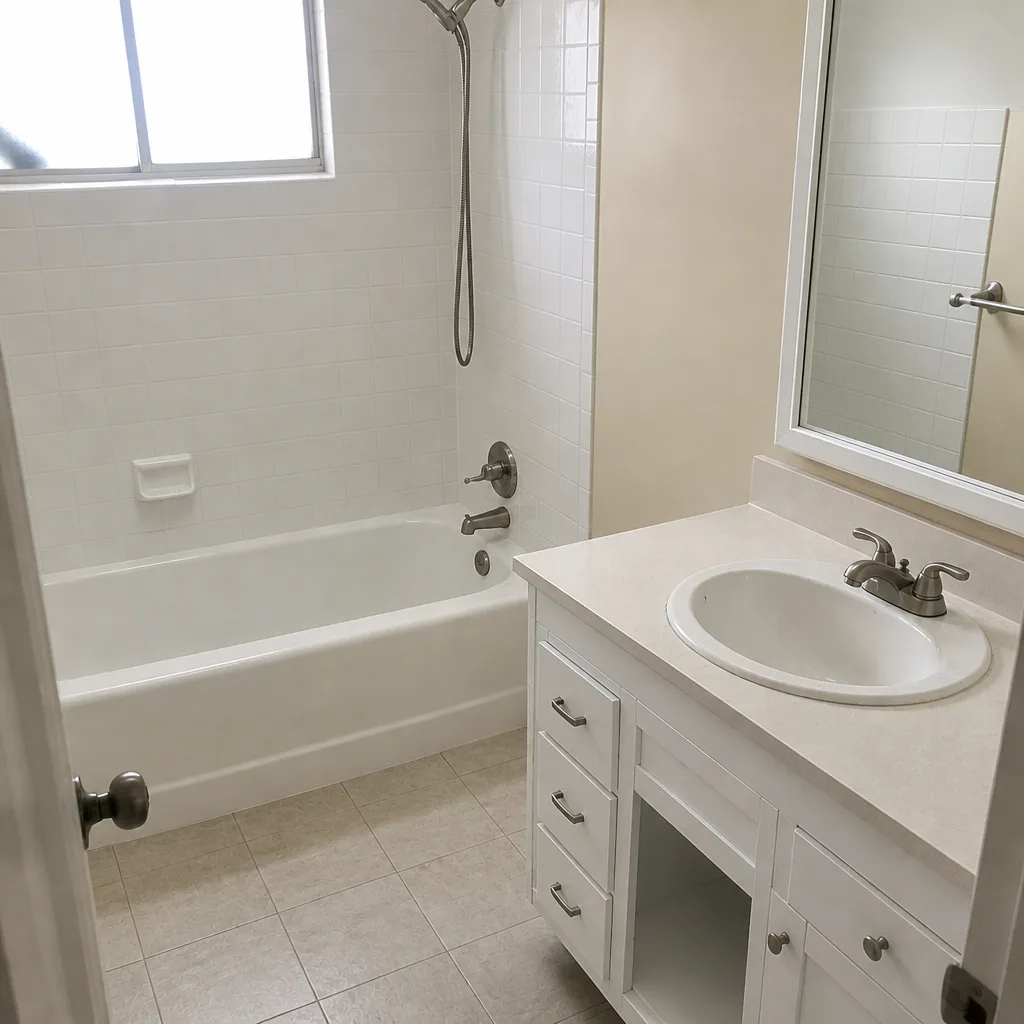 After
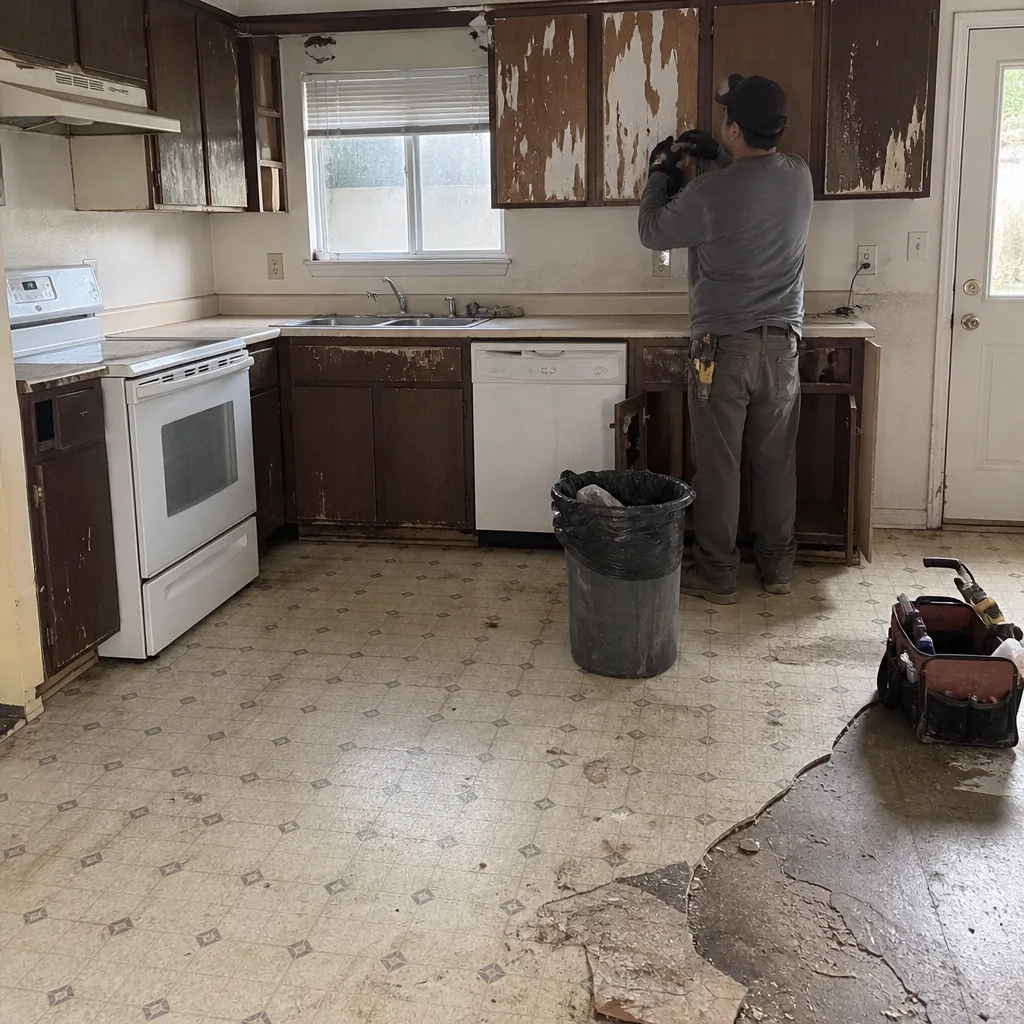 Before
 After
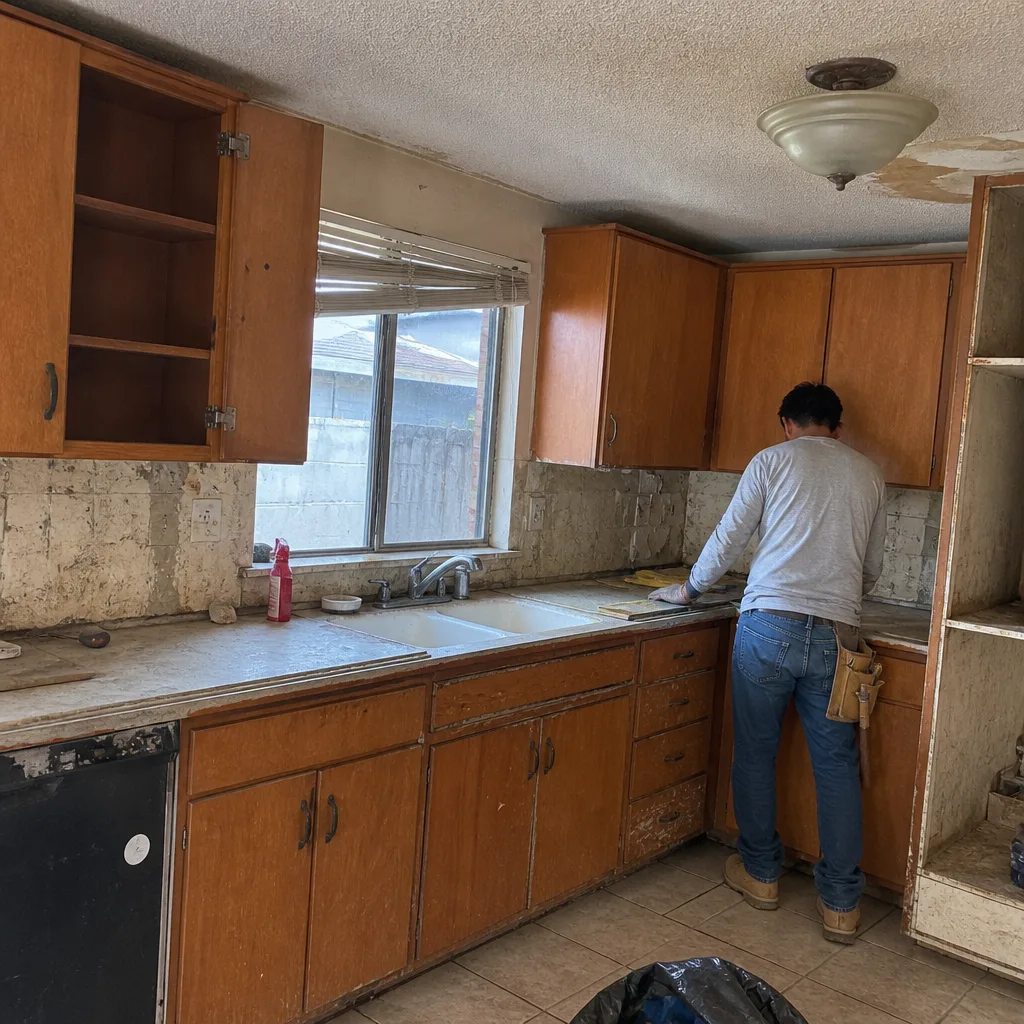 Before
 After
When to Call a Professional
Most of this checklist is homeowner-safe. A few items sit behind the wall or involve structure, and those are where you want a trained eye. Call a professional when you see a stucco crack with an offset or a soft, spongy feel near it. Call when the crawl space has standing water, or when the floor near exterior walls is soft. Call when a concrete slab has settled or a crack has opened in the edge and continues to widen. Call when cabinets have separated from the wall, when a counter has a loose seam, or when a painted trim area bubbles and won’t stop. And call if you’re just not sure. Remodeling Citrus Heights offers free estimates in Citrus Heights. Our technicians have up to 15 years of experience, and the written estimate sets the final price with no change orders. Call (279) 201-5321. We answer 24/7. Fast dispatch from 7am to 7pm, Sunday through Friday.
Frequently Asked Questions
Inspect stucco monthly with a quick visual walk-around and do a full crack-mapping pass each August and September, before the wet season. Citrus Heights homes go through a long dry summer followed by a compressed wet winter, and that dry-wet swing opens hairline cracks that let water in. Monthly checks catch them while they’re small. Call (279) 201-5321 for a free estimate if you find a crack that’s wider than 1/8 inch or has an offset.
If your crawl space has no barrier, a barrier torn or shifted by foot traffic, or one that’s laid short at the foundation walls, it needs attention before November. A proper barrier is 6 to 12 mil reinforced polyethylene, covers the full floor, overlaps at least 6 inches at seams, and runs up the wall. Call (279) 201-5321 for a free estimate on crawl space moisture work.
Check the filter within a few days of any smoke event clearing in Citrus Heights, and replace it if it’s loaded. Under normal conditions, monthly checks and replacement every 60 to 90 days for a standard 1-inch filter is the right rhythm. Smoke particles accelerate that. Call (279) 201-5321 for a free estimate if your ducts show signs of leaks.
Reseal every 2 to 3 years, and sooner if water no longer beads on the surface. Do it before the wet season so the seal cures before the rain arrives. Expansive clay soil in the Citrus Heights area moves concrete seasonally, and a sealed slab handles that movement better. Call (279) 201-5321 for a free estimate if a slab has settled or a crack has opened at the edge.
No. The written estimate sets the final price, and we don’t issue change orders for work that’s within the agreed scope. That’s why the free estimate includes a walk-through and a line-item quote before anything is scheduled. Call (279) 201-5321 to schedule yours.
Most single items (stucco patching, caulk replacement, concrete reseal, a filter and duct check) are handled in a single visit or a short project. When an item has grown into a larger job, like a crawl space barrier with subfloor repair, we scope it in phases and tell you the timeline in the written estimate. Call (279) 201-5321 to talk through your situation.
The Bottom Line

Maintenance on a Citrus Heights home isn’t about big seasonal projects. It’s about the monthly ten-minute walk-around that catches a stucco hairline before the wet season finds it. The compressed rain window from November through February punishes anything you let slide, and the clay soil and smoke-season air add their own pressure points. Work the twelve-month checklist. Catch cracks, filters, barriers, and concrete edges while they’re cheap. When a fix is behind the wall, involve a pro. Remodeling Citrus Heights offers free estimates, written line-item quotes, and fixed pricing with no change orders on the work we scope. Call (279) 201-5321 to get started.
Written by the team at Remodeling Citrus Heights.