
Mr-Glass Home Remodeling in Citrus Heights: A Homeowner’s Guide
A new window can make your house hotter if it’s the wrong glass for that wall. A west-facing window with a high solar heat gain coefficient turns your living room into a greenhouse every July afternoon, and most window salespeople won’t bring it up because the number is buried in a spec sheet. The right glass for a Citrus Heights ranch home depends on which direction the wall faces, and that’s the whole conversation.
What Is SHGC, and Why Does It Matter on a West-Facing Wall?
SHGC stands for Solar Heat Gain Coefficient. It’s the fraction of solar heat that passes through a window, measured from 0 to 1. A low number blocks more heat. In Sacramento’s Climate Zone 11, a west-facing wall takes the worst of the summer sun from mid-afternoon until sundown, and a high-SHGC window on that wall can push a room’s temperature up faster than the air conditioner can pull it back down. South-facing glass gets steady sun all day and needs a similarly low rating. North-facing windows can usually carry a higher SHGC because they never take direct summer sun.
What most homeowners don’t hear is that SHGC and visible light transmission trade off against each other. A very low-SHGC coating blocks heat, but it also darkens the room and can shift the color of daylight slightly. The right answer is per-wall, not per-house:
- West-facing: the lowest SHGC you can get without making the room feel dim in winter.
- South-facing: low SHGC with overhangs or shade, since the sun angle changes with the season.
- East-facing: moderate SHGC, because morning sun is gentler than afternoon sun.
- North-facing: higher SHGC is fine and often gives better light for the money.
This is where a product line and a contractor’s judgment have to work together. If you’re weighing glass options alongside other work, our home remodeling team can walk a house wall by wall before anyone orders product.
Which Mr-Glass Products Meet California Title 24 for Replacement Windows?
California Title 24 sets the minimum energy performance for replacement windows, and the exact numbers shift depending on climate zone, window area, and how the rest of the house performs. In Climate Zone 11, a replacement window has to clear a U-factor and SHGC threshold, and the product has to be labeled and certified to prove it did. Mr-Glass product lines include dual-pane and low-E configurations built to meet those thresholds, but “meets Title 24” is a claim that has to be verified on the actual product label, not assumed from a brochure.
Here’s what to check before you sign:
- The NFRC label. Every rated window ships with a National Fenestration Rating Council label listing U-factor, SHGC, and visible light transmission. No label, no proof.
- The climate zone match. Confirm the product is certified for Climate Zone 11, not a generic California rating.
- The whole-house number. Title 24 allows trade-offs, so a slightly higher-SHGC window on a shaded wall can sometimes be offset by a better-rated window elsewhere. That math belongs to whoever is pulling the permit.
- Permit and inspection. Replacement windows in Citrus Heights generally require a permit, and the inspector will want to see the labels. Ask your city’s building department what applies to your address.
If you’re pairing window work with a larger interior project, it helps to plan the kitchen remodeling and window order together so the glass arrives before the drywall goes back up.
Can Mr-Glass Glass Options Fit Older Citrus Heights Ranch Homes Without Full Frame Replacement?
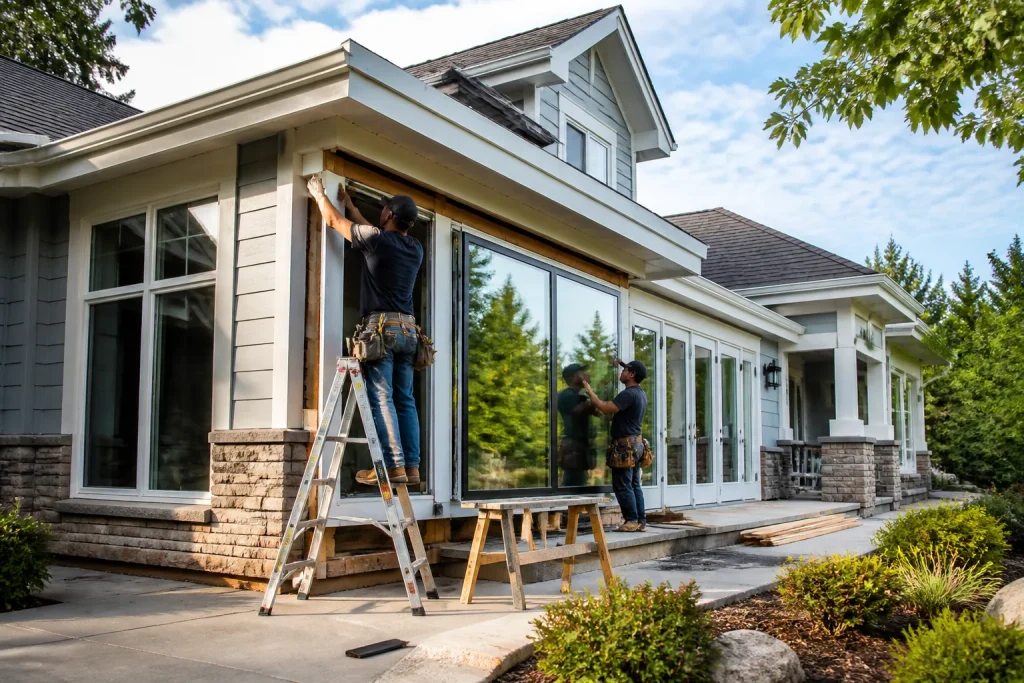
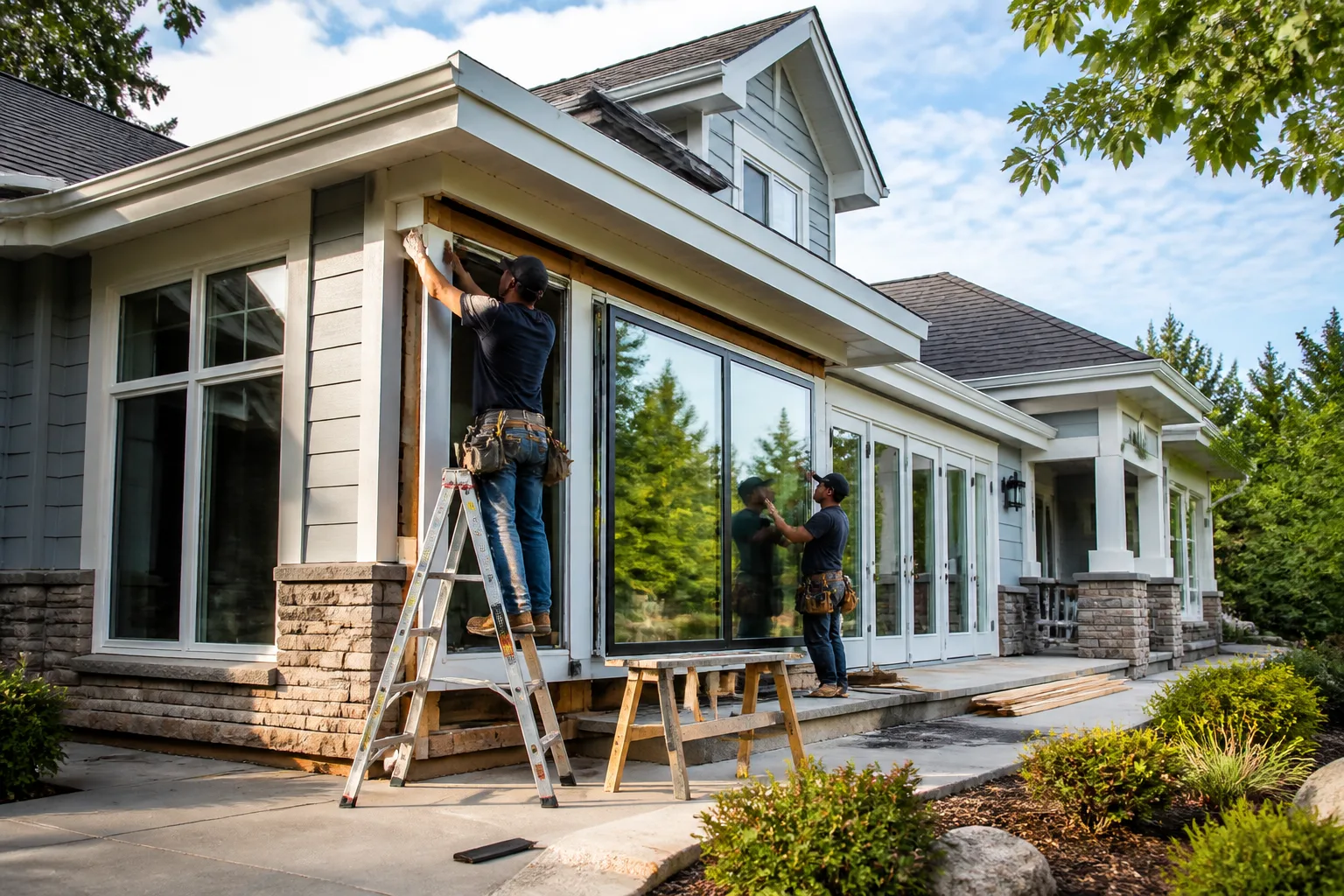
Often, yes. Many Citrus Heights ranch homes were built with wood or aluminum frames that are still structurally sound, and a glass-only swap or a pocket replacement can drop new glazing into the existing opening. The frame gets inspected first, because a rotting sill or a bowed header means the frame has to come out. When the frame is solid, the job is faster, cheaper, and less disruptive to the interior trim.
Where it gets tricky is older construction tolerances. Openings in mid-century ranch homes are rarely perfectly square, and a glass-only unit has to match the existing opening within a fraction of an inch. That’s a measurement job, not a guess. We’ve seen installers force a replacement sash into an out-of-square opening and then blame the product when the unit leaks air a season later.
Full frame replacement makes sense when:
- The frame is soft, cracked, or showing water damage at the sill.
- The existing opening is out of square enough that a pocket unit can’t seal.
- You want a different window style or a larger opening.
- The old unit has no thermal break, and the frame itself is transferring heat.
Glass-only replacement usually makes sense when the frame is sound and you’re chasing energy performance rather than a new look.
Glass-Only Swap vs. Full Frame Replacement: What Do the Numbers Look Like?
A glass-only swap costs less per opening because you’re paying for product and labor, not tear-out, new framing, interior trim, and exterior patching. Full frame replacement costs more because it touches more of the house: siding or stucco gets disturbed, interior trim gets rebuilt, and the permit and inspection scope widens. If the existing frames are healthy, a glass-only swap delivers most of the energy benefit for materially less money. If the frames are failing, a glass-only swap is money spent on a bad foundation.
The honest way to decide is to have the frames inspected before pricing, not after. Ask for a written, line-item estimate that separates product, labor, and any framing or trim repair. A quote that lumps everything into one number leaves you with no way to see which scope you’re actually buying.
For projects that go beyond windows, our bathroom remodeling and flooring work run on the same principle of separating material choice from what’s behind the wall.
What Should You Verify on the Installation Warranty vs. the Product Warranty?
These are two different documents, from two different parties, and homeowners conflate them constantly. The manufacturer’s warranty covers the product: the glass, the seal, the frame material, the hardware. The installer’s warranty covers the labor: the sealant, the flashing, the fit, the water tightness, the trim. When a window leaks a year later, the question is whether the failure is product or installation, and the two warranties decide who pays.
Before you sign, confirm:
- What the product warranty covers and for how long, including seal failure and glass breakage.
- What the installation warranty covers, especially water intrusion and air sealing.
- Who honors each warranty and how a claim is filed.
- Whether the warranty transfers if you sell the house.
- Whether the installer is the one who pulls the permit, since permit records matter in a dispute.
The brand relationships we lean on, from James Hardie cladding on the outside to Grohe and Toto fixtures inside, come with their own spec sheets and warranty terms. Built to the brand’s spec, not the shortcut, is the standard that actually holds up when a warranty claim lands.
When Should You Call a Pro on Window and Glass Work?
Call a professional when the work involves anything behind the wall, anything above ground level, or anything that touches the building envelope. Glass is heavy, tempered units can shatter unpredictably, and a second-story window is a fall hazard even with a ladder that looks stable. Water intrusion from a bad flashing job won’t show up for a season, and by then the damage is inside the wall. A trained installer is the difference between a window that performs for years and one that leaks quietly.
If you’d rather not deal with the measuring, permitting, and warranty paperwork yourself, that’s a fair call. Call (279) 201-5321. We answer 24/7. Fast dispatch from 7am to 7pm, Sunday through Friday.
The Bottom Line
SHGC is the number that decides whether a new window helps or hurts in Citrus Heights. Match it to the wall’s exposure, confirm the product carries a current NFRC label certified for Climate Zone 11, and check that the frames are sound before you price a glass-only swap. Keep the product warranty and the installation warranty separate in your head, and get both in writing before work starts.
Our technicians have up to 15 years of experience, and we work with an unusually wide roster of brands, from Sakrete and James Hardie outside to KraftMaid and Cambria inside, so the spec follows your budget instead of the other way around. If you’re in Citrus Heights and need help, Remodeling Citrus Heights offers free estimates. Call (279) 201-5321 and we’ll price the job with a written estimate that sets the final number.
Frequently Asked Questions
Go as low as you can without turning the room gloomy. West-facing glass in Climate Zone 11 takes the strongest afternoon sun, so a low-SHGC, low-E unit is the default choice, and the exact number has to satisfy Title 24 alongside the rest of the house. Call (279) 201-5321 for an exact quote; estimates are free.
They can, when the old units were single-pane and the new glass is correctly rated for each wall. The savings depend on your current windows, shading, and how the house is insulated, so treat any specific percentage promise with suspicion. A wall-by-wall spec is the only way to know. Call (279) 201-5321 to schedule a free estimate.
Likely yes, and the scope of the permit depends on whether it’s a glass-only swap or full frame replacement. Confirm with the Citrus Heights building department before ordering product, and make sure the contractor is the one pulling it. Call (279) 201-5321 for a written estimate that lists the permit scope.
No. The manufacturer’s warranty covers the product, the installer’s warranty covers the labor and sealing, and they are separate documents. Ask for both in writing, check whether each transfers if you sell, and read the exclusions. Call (279) 201-5321 and we’ll walk you through what each covers.
Written by the team at Remodeling Citrus Heights.
Need Construction Help?
Call Remodeling Citrus Heights - the local pro we connect you with is licensed and insured, here with fast help in Citrus Heights.
(279) 201-5321